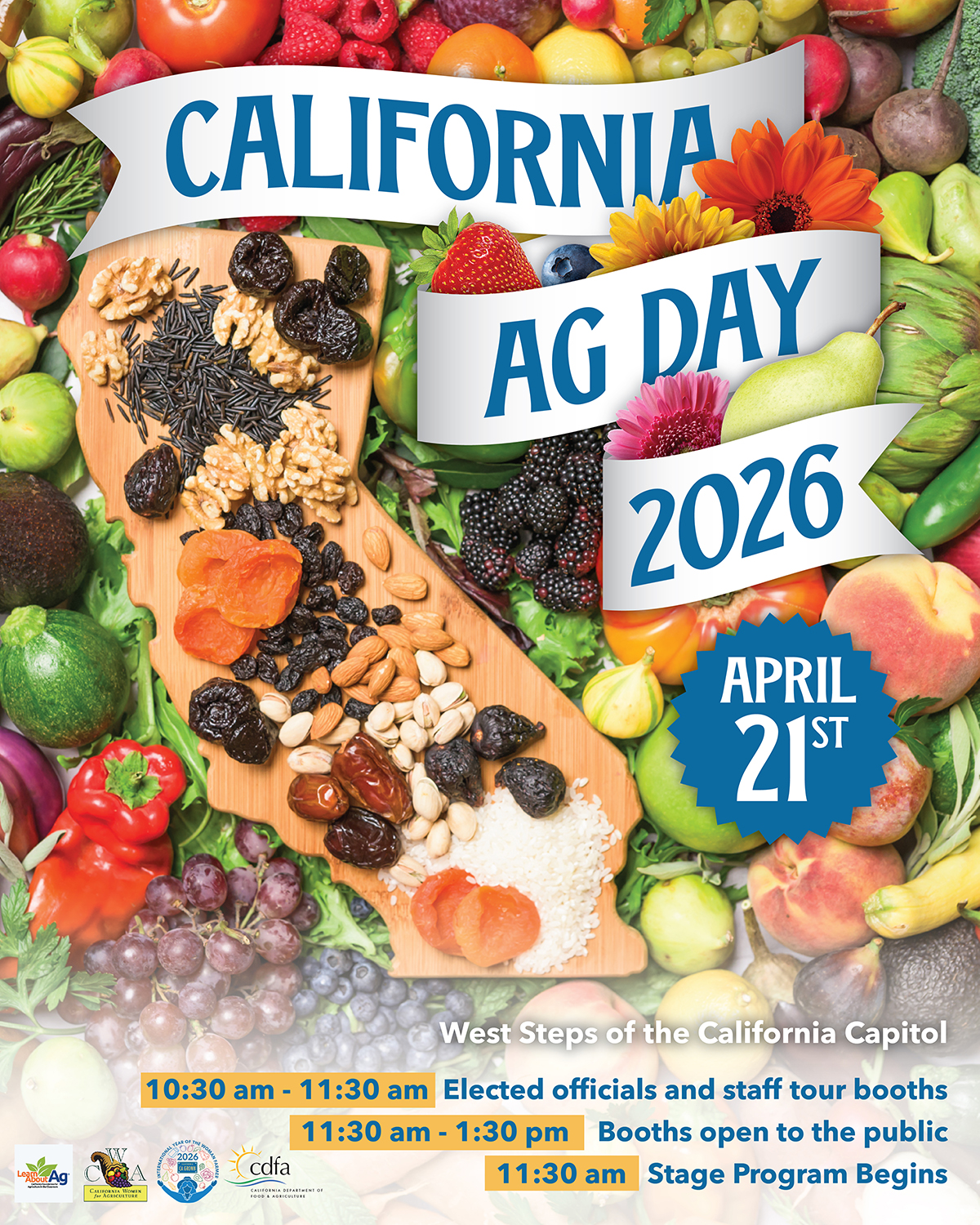
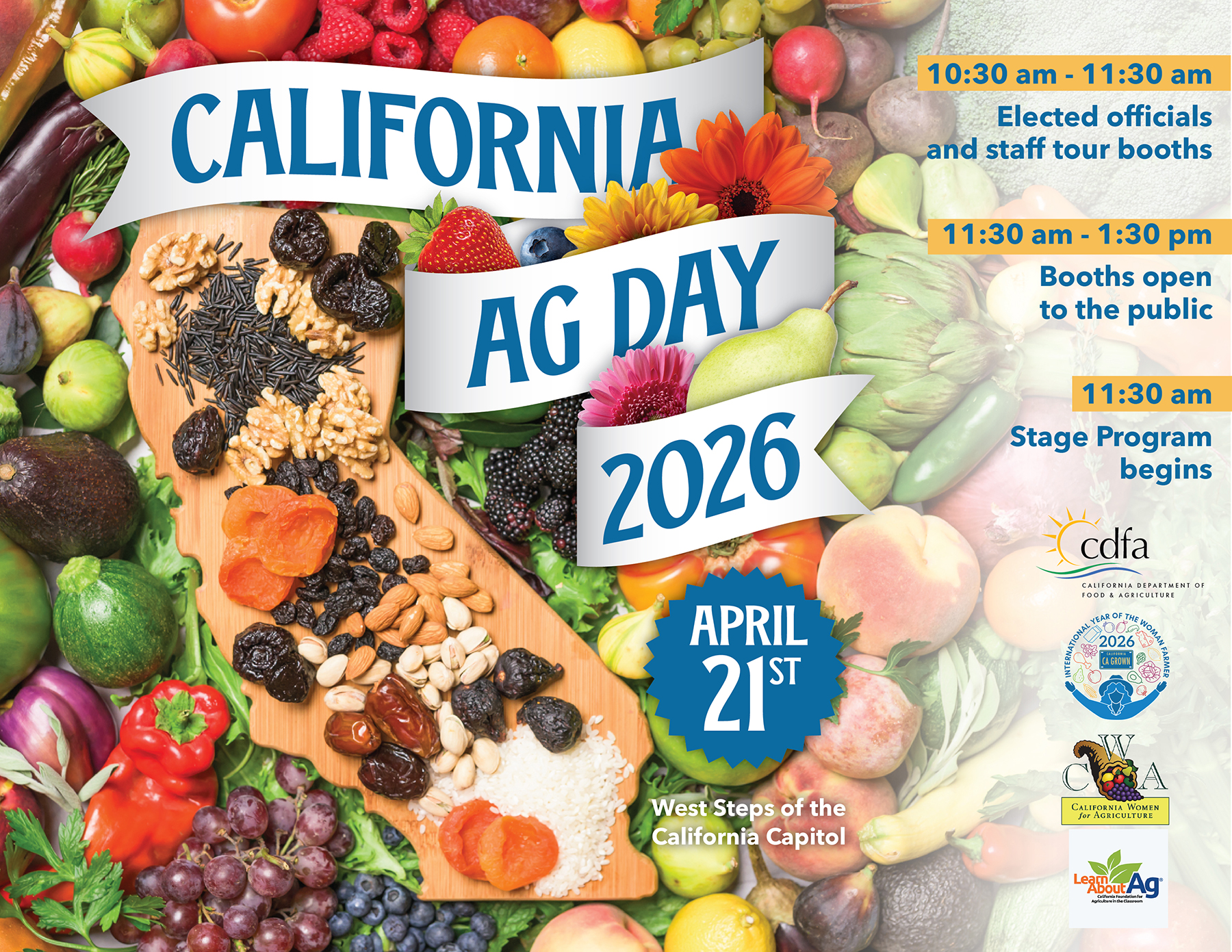
California Agriculture Day returns to the west steps of the State Capitol on Tuesday, April 21, 2026. Come on out and help us celebrate our agricultural community!
Our theme this year is “California Leads,” a nod to all of the ways our farmers, ranchers and rural communities lead the nation and the world when it comes to productivity, innovation and sustainability.
2026 is the International Year of the Woman Farmer, so we will also be celebrating the achievements of California women in agriculture, who outpace the national average by making up 38% of producers and operating more farms than any other major ag state.
Come on out and join us on April 21 and find out even more about all the ways California agriculture leads. The event is open to elected officials and staff from 10:30 am – 11:30 am and to the public from 11:30 am – 1:30 pm.
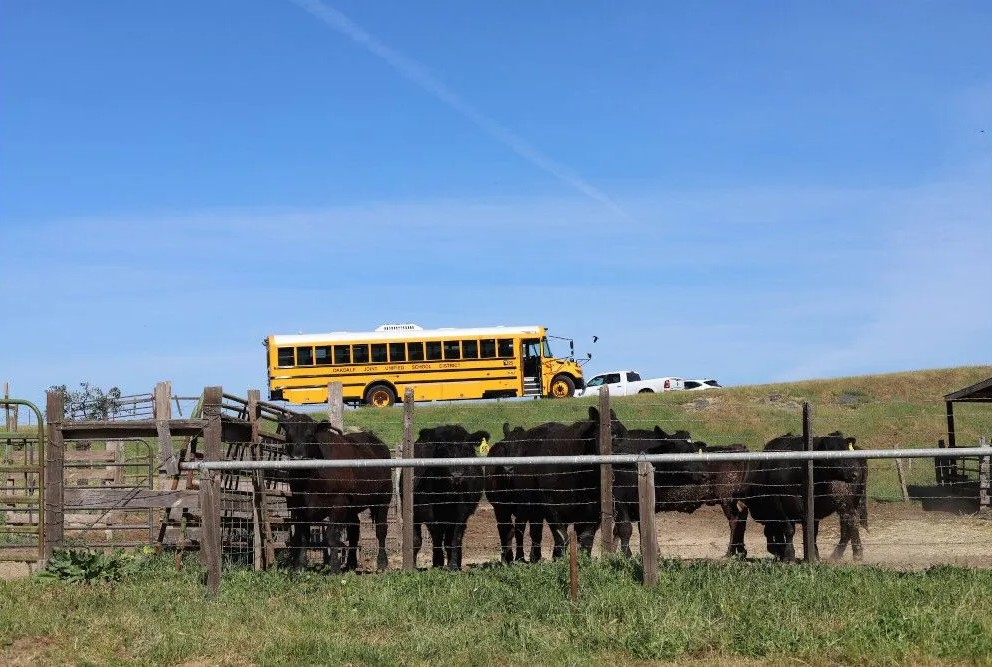
California Beef Council’s “California Beef in Schools” Program helps California beef producers and school nutrition professionals better understand each other’s roles and build connections within the farm-to-school space. (Photo courtesy of California Beef Council)
From the California Beef Council
Tours aim to show how cattle are raised and how beef is processed
ROCKLIN, CA – As schools across California work to incorporate more locally sourced foods into their meal programs, many districts are increasingly exploring opportunities to source proteins directly from producers. California’s Ranch-to-Tray tours help bridge that connection by bringing school nutrition professionals and beef farmers and ranchers together to better understand the pathway from ranch to tray.
“School nutrition staff are a big part of kids’ education because nutrition plays such an important role in supporting their learning, growth, and development,” said registered dietitian Kori Dover, Director of Food and Nutrition Outreach for the California Beef Council (CBC). “School meals are often some of the most nutritious meals children receive, and school nutrition professionals play a key role in making sure students benefit from those meals by keeping them appealing and enjoyable. As schools seek to source more items like locally-raised beef for their menus, school nutrition professionals have a few practical challenges to deal with.”
Specifically, they need to understand how the beef supply chain works and what the pathway from beef production to school meal programs looks like.
The Ranch-to-Tray tours were designed to show the journey of beef, from how cattle are raised in California to how beef is processed and ultimately served in school meals. The intent is to bring school nutrition professionals and California’s beef producers together to better understand each other’s roles and build connections within the farm-to-school space. “We want to make that pathway more visible, practical, and connected to real-world applications,” Dover said.
Last month, two days were dedicated to providing a closer look at how beef is produced and incorporated into school meals.
On March 17, forty-five attendees gathered at the Oakdale Central Kitchen of the Oakdale Joint Unified School District (OJUSD) before traveling to local beef and dairy operations owned by the Hoekstra and Ardis families to better understand the early stages of the beef lifecycle and the connection between dairy and beef systems. Attendees learned about animal care and daily management practices, the link between animal welfare and end-product quality, and how dairy operations contribute to a more sustainable food system by using byproducts and commodity feed sources, reinforcing the connection between dairy and beef production.
Lunch was hosted on-site and featured a St. Patrick’s Day menu including smoked brisket stew, green beans, biscuits with fresh local honey, garden salad, and fresh fruit. The beef served at lunch came from Ardis Cattle Company, which sells directly to OJUSD, demonstrating how direct-to-school purchasing of local beef is already being implemented at the district level.
An afternoon panel Q&A session highlighted the importance of strengthening connections between school meal programs and local producers, as well as the opportunities available to support schools in sourcing local foods. Jason Beach, Director of Café Services for OJUSD, noted that “building direct relationships with local producers helps us serve high-quality meals while also supporting our local community,” adding “sourcing locally allows districts to invest in both students and regional agriculture.” Ross Ardis, owner of Ardis Cattle Company, echoed that perspective, sharing, “It’s exciting to be part of what local kids are eating, especially knowing our own son was one of them, and it’s a way for us to invest in our community.”
The discussion also highlighted available support for schools looking to expand local procurement. “There are resources and funding opportunities available to help schools incorporate more regional and local foods into their meal programs while supporting districts and producers as they navigate the process,” said Michael Ackley-Grady, Farm to School Regional Producer Engagement Specialist for the California Department of Food and Agriculture’s (CDFA) Farm to School Network.
On day two, March 19, thirty-two attendees met at Chico State University for a tour of the Meats Lab and Beef Lab with Haydn Clement, who demonstrated how beef is processed into cuts for foodservice, discussed food safety and handling, and walked through fabrication practices. Lunch featured ground beef tacos prepared by the Columbia Elementary School District, along with Chico State produce from the university farm and fresh local fruit, highlighting how schools are incorporating locally sourced California ingredients into student meals.
“We don’t need to use much seasoning on our taco meat because the fresh ground beef has a rich flavor on its own, and our students really enjoy it. Paired with fresh salsa, it’s a meal students look forward to,” said Deanna Mertle, Food Service Director, Columbia Elementary School District.
Over the course of the two days, school nutrition professionals from twenty-five different school districts took part in the tours, education, and networking. “Networking between schools and beef producers is especially valuable,” Dover said. “Understanding where food comes from and how it fits within the food system is a key part of nutrition education, and it helps connect students to nutrient-dense protein sources, like beef, in school meals while strengthening communities across California.”
About the California Beef Council
The California Beef Council (CBC) was established in 1954 to serve as the promotion, research, and education arm of the California beef industry, and is mandated by the California Food and Agricultural Code. The CBC’s mission is to amplify the voice of the California beef industry to strengthen beef demand through innovative promotions, research, and open communication. For more information, visit www.calbeef.org.
About the Beef Checkoff
The Beef Checkoff Program was established as part of the 1985 Farm Bill. The checkoff assesses $1 per head on the sale of live domestic and imported cattle, in addition to a comparable assessment on imported beef and beef products. States may retain up to 50 cents on the dollar and forward the other 50 cents per head to the Cattlemen’s Beef Promotion and Research Board, which administers the national checkoff program, subject to USDA approval.
About the California Beef in Schools program
The California Beef in Schools program is a collaboration between the California Beef Council and California Cattle Council, and aims to empower youth to make informed food choices that support growth and development throughout their lifespan by providing learning materials on beef and its journey from pasture to plate. The California Beef in Schools mission is to share innovative nutrition education and resources while bringing California’s farmers, ranchers, educators, and school foodservice workers together to support their role in healthy lifestyles for California kids. For more information, visit cakidseatbeef.com.
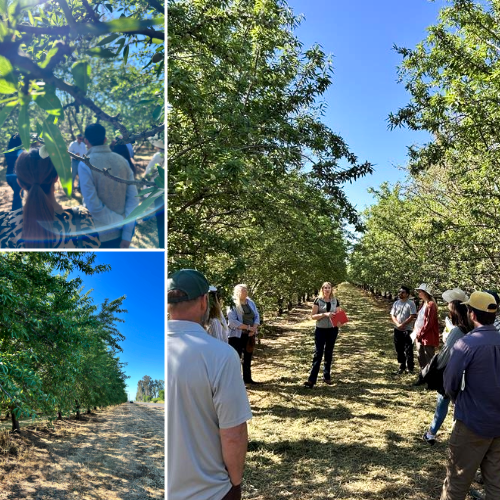
On Monday, April 6, the Almond Board of California hosted a morning in the orchard at Westwind Farms to kick off Healthy Soils Week. Attendees learned from growers and experts about how California almond farmers are using regenerative practices to build soil health and support long-term sustainability.
We started the week with a farm tour alongside the Almond Board of California, where we heard directly about the latest research, industry leadership, and farmer experience shaping soil health on almond farms.
We also appreciated our partners at Sustainable Conservation for featuring OARS Director Dr. Tawny Mata in a recent blog, where she shares insights on strengthening groundwater resilience, advancing healthy soil practices, and bridging the gap between research and real-world agricultural management.
We’ll wrap up the week with a tour alongside our legislative partners, but the message remains clear: healthy soils matter.
Across California, the Healthy Soils Program supports farmers and ranchers in adopting practices that: 🌿 Build soil health 💧 Improve water retention 🦋 Support biodiversity 🌎 Strengthen climate resilience
Because investing in our soils means investing in the future of California agriculture.
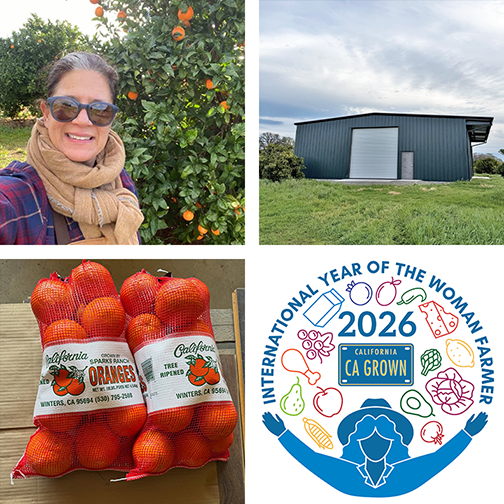
Sparks Ranch owner Karina Sparks received CDFA Farm to School Incubator Grant Program funding in part to build the pictured sorting and storage shed to help expand her Yolo County citrus farm’s offerings to local schools.
CDFA’s California Farm to School Incubator Grant Program supports small to midsize farms while increasing healthy food choices for school meals. And in California, where women outpace the nation by making up 38% of producers, that includes supporting women in agriculture.
For example, Karina Sparks, owner and operator of citrus farm Sparks Ranch in Yolo County, received funding in the 2023/24 grant cycle. Via the farm to school grant, Sparks has increased sales of her high-quality, delicious oranges directly to local school districts – which supports her small, local farm and provides meaningful opportunities for women in agriculture.
Sparks utilized CDFA Farm to School grant funding to build a larger sorting and storage shed, making it easier and more efficient to move and pack citrus, hire additional crew members and expand local citrus offerings into school meal programs.
While her farm to school project is only halfway complete, Sparks noted that “Progress so far has been remarkable – time savings and increased efficiency have made a real difference.”
“School districts are my most valued customers, not only because of the volume they purchase, but because of how much students enjoy the oranges,” Sparks said. “Hearing that they love the fruit—and often come back for seconds—is the best reward, especially during winter when vitamin C matters most.”
With 2026 being celebrated as International Year of the Woman Farmer, Sparks noted that being a woman in agriculture means “breaking barriers. For a long time, agriculture has been a male-dominated field, but women are steadily making their mark. Every year, I see more women stepping into leadership roles across the farming industry. We are proving that there should be no gender barriers in agriculture. As a woman farmer, the shoes I had to step into at the beginning felt very large. But over time, I found my path. After 15 years of running a farm, those shoes no longer feel oversized – I’ve grown into them and am now filling my own shoes. The journey has been incredibly fulfilling. While there is still progress to be made, I’m confident we will continue moving forward quickly.”
The advice Sparks would give to the next generation of women in agriculture is simple: “Don’t give up and work hard. Farming can be challenging, but persistence and dedication will take you far. At the same time, remember to slow down and appreciate the beauty of nature around you. Take time to smell the air, feel the soil and enjoy the land you’re working with. And don’t be afraid or too shy to ask for help. Agriculture is built on community. There is always support to be found in your neighbors, friends and the people around you. Working together and learning from others is one of the greatest strengths in this industry.”
Sparks finds pride and joy in farming.
“I’m proud to be a woman in farming, and I’m proud to keep the Sparks name going strong,” she added. “When I first took over the ranch, I honestly had no idea what I was doing. It truly took a village – support from my community, neighbors, friends and mentors – to help me learn and grow. Now, I can confidently say: I can do this. And not only am I doing it, I’m loving every minute of it.”
As Women’s History Month draws to a close, we’re excited to share a special conversation between CDFA Secretary Ross and Shannon Douglass, president of the California Farm Bureau. This video offers an insightful and engaging look into leadership, career trajectories, and the experiences shaping women in agriculture today.
Secretary Ross and Shannon dive into topics ranging from leadership strategies to personal experiences. They offer valuable insights for anyone interested in the future of agriculture and the role of women in the field.
Watch the full video here and join us in celebrating the voices, perspectives, and accomplishments of women leaders in agriculture.
It’s important to note that while we close Women’s History Month in March, we continue celebrating International Year of the Woman Farmer 2026. This observance highlights the vital role women play across California agriculture. Women farmers are leaders, innovators, and stewards of the land who strengthen rural communities and help sustain the state’s food system. With more than 45,000 women producers stewarding over 11 million acres of farmland in California, 2026 is an opportunity to celebrate their achievements, share their stories, and inspire the next generation shaping the future of agriculture.
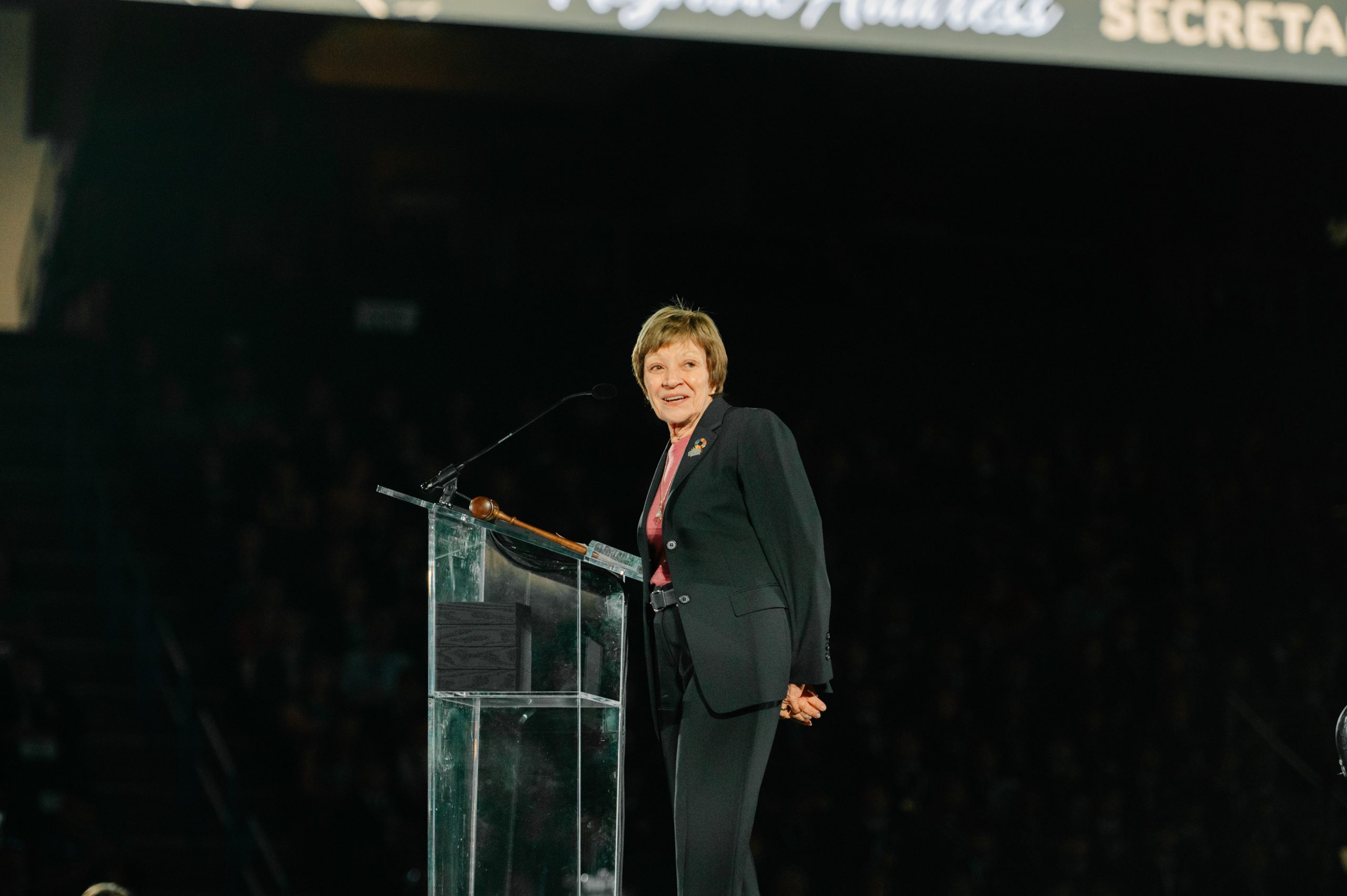
Serving as the opening speaker for the Monday program, Secretary Ross helped kick off the day by sharing her enthusiasm for the future of agriculture and encouraging students to seek out opportunities to move the industry forward. Her message centered on the vital role young leaders play in shaping the future of California agriculture.
Secretary Ross described how advancements in agricultural technology, from irrigation systems to data-driven tools, are transforming the way food is grown, processed, and delivered. She emphasized that future leaders will need not only agricultural knowledge but also skills in science, technology, and continuous learning to help the state remain competitive and effective.
She also highlighted statewide efforts to expand opportunities in agriculture through the California Jobs First workforce development and innovation initiative. Programs such as the F3 Initiative and Beam Circular are regional examples supporting ag tech as a pathway for rewarding careers while strengthening California’s food and agriculture system.
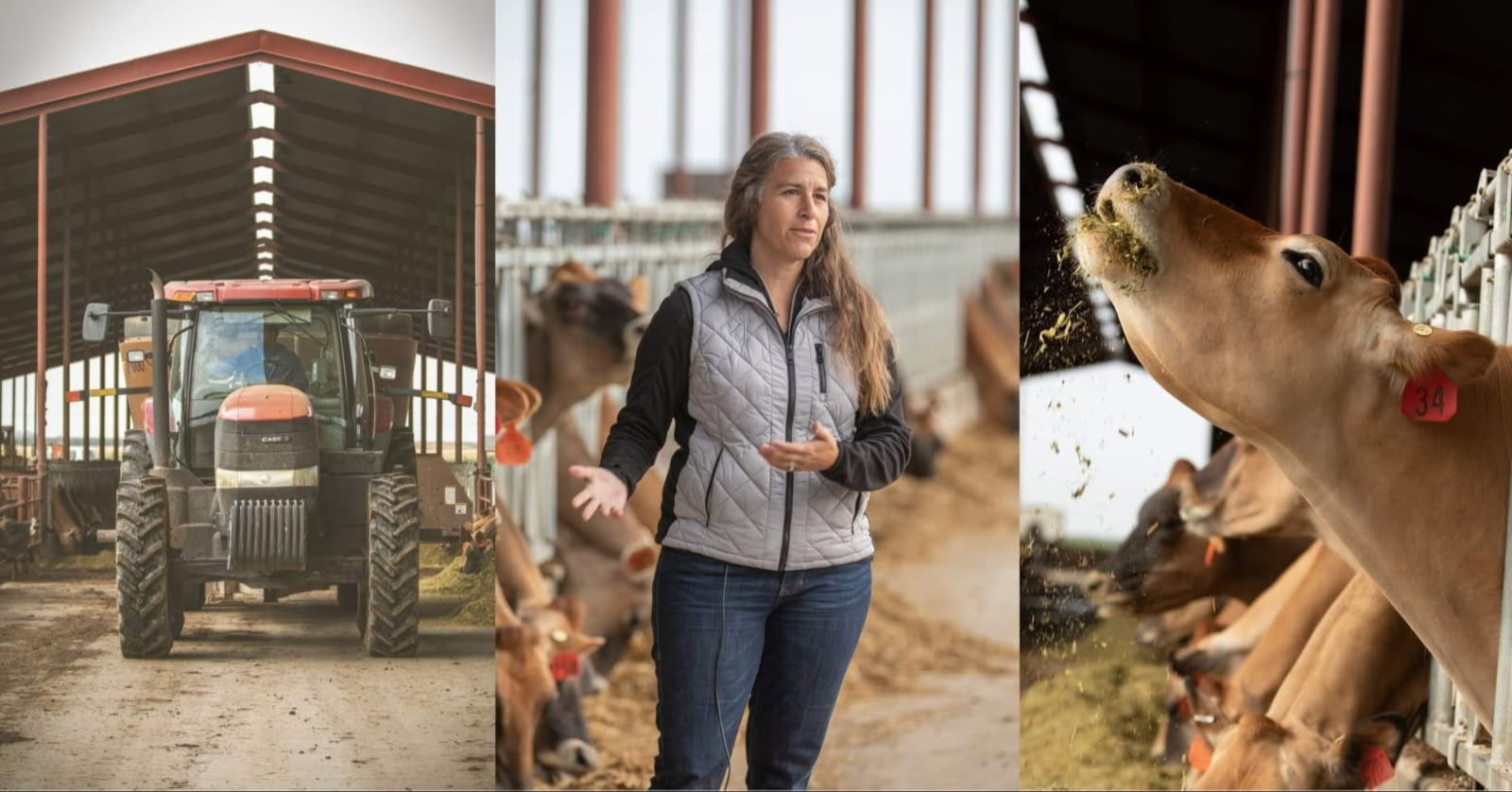
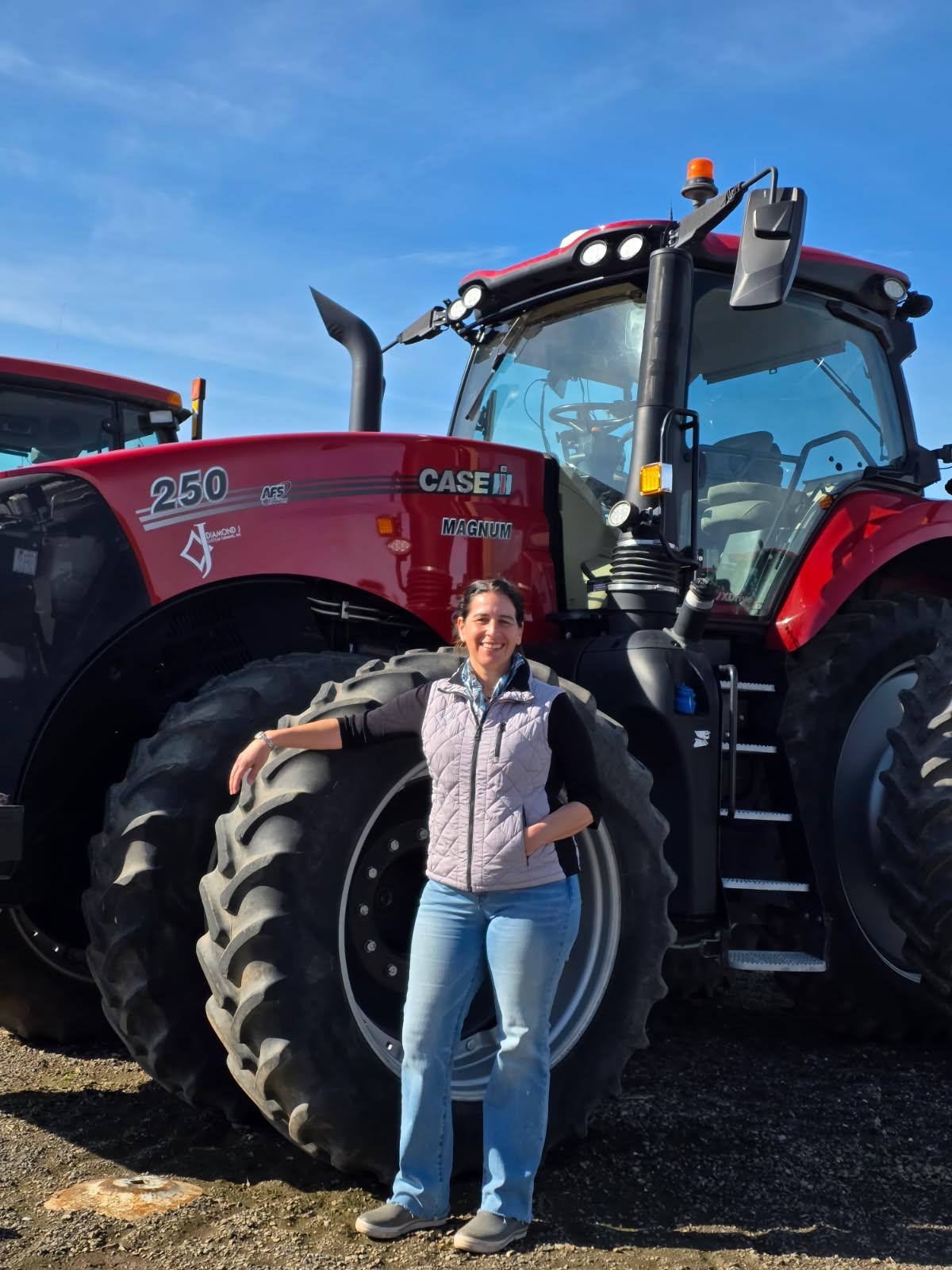
In celebration of the International Year of the Woman Farmer, we’re honoring the women whose paths into agriculture were shaped not by tradition, but by curiosity, mentorship, and a deep commitment to learning. For Luciana Jonkman, a dairy farmer, consultant, and lifelong problem solver from Oakley, California, agriculture became a calling not because she was born into it, but because people along the way took the time to encourage her to explore different fields of study.
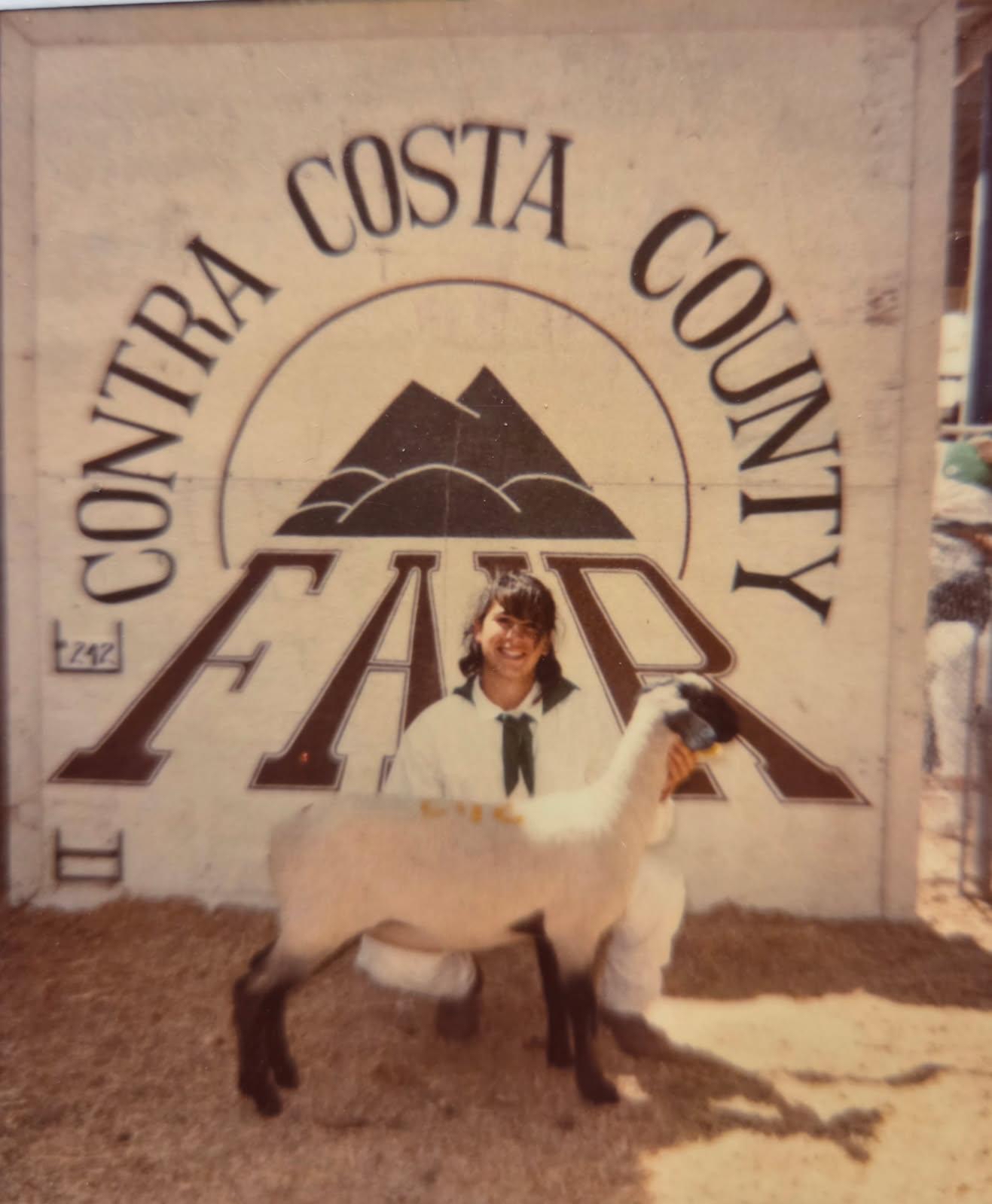
Luciana didn’t grow up on a farm but was introduced to agriculture through 4-H at the age of nine. Those early experiences with 4-H sparked a lasting interest in animals and problem solving. Luciana carried that curiosity to college, enrolling at Humboldt State as a math major. While she enjoyed the logic of mathematics, she found little joy in the discipline on its own. What energized her was applying problem solving to real-world challenges, especially those involving animals. After two years, uncertain about what career opportunities existed in agriculture but confident she wanted meaningful, hands-on work, she transferred schools and ultimately found her way to UC Davis in the fall of 1995.
She graduated in 1998 with a degree in Animal Science and a minor in nutrition science, but it was the guidance of her academic advisor, a dairy researcher, that proved transformative. He encouraged her to work at the university dairy, opening the door to an immersive education in dairy farming. There, she learned about cow physiology, diet formulation, and the delicate balance between nutrition, productivity, animal welfare, and economics. Through internships at the university dairy and with an independent dairy nutritionist, Luciana began blending her love of math with animal nutrition, ensuring cows were fed optimally while supporting both biological outcomes and operational efficiency.
Each experience revealed new layers of complexity. Calves had vastly different needs than lactating cows, and every stage of production introduced variables that demanded constant adjustment and careful thinking. A summer internship at Woody Hill Farms in New York further broadened her perspective. Working alongside Cornell graduates and witnessing a large-scale dairy operation firsthand reinforced the importance of exposure. From that point on, Luciana became a strong advocate for internships, believing that understanding what you don’t want to do is just as valuable as discovering what you love.
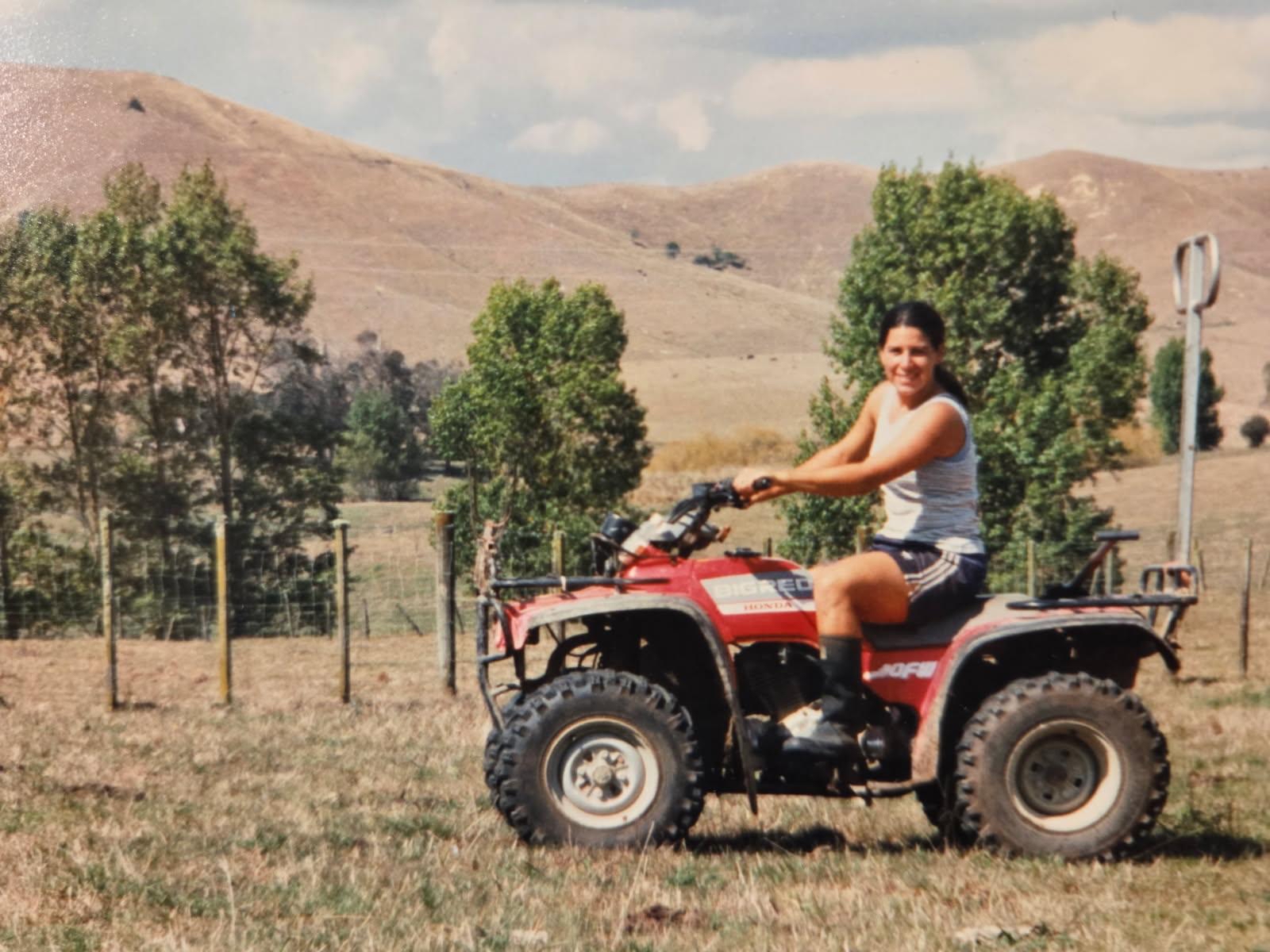
After graduating from UC Davis, Luciana took that belief beyond borders. She spent nearly two years working on dairy and sheep farms in Australia and New Zealand, not as a student, but as a farm laborer. She milked cows, fed livestock, moved fence lines, changed pastures, and sorted wool, gaining a grounded understanding of the daily realities of farming. Those hands-on experiences affirmed her desire to keep learning and led her back to the classroom to pursue a master’s degree at Cornell University, where she worked with professors who continued to challenge and shape her thinking.
Her career evolved when she joined Cargill as a dairy nutritionist, where she intentionally positioned herself as an expert in transition cows. That foundation led her to start Progressive Dairy Solutions, a consulting business that eventually served approximately 12 percent of the national dairy herd. While Luciana no longer handles day-to-day nutrition consulting, she remains involved on a project management basis.
Together with her husband, Luciana expanded her work beyond consulting. They launched Diamond J Custom Farming and Dairy, a harvesting, farming, and manure-spreading operation. In 2016, they purchased their own dairy farm. With that growth came new challenges, particularly around manure management, an issue Luciana views as one of the most significant risks facing the future of dairy.
Managing manure responsibly became both a professional focus and a personal commitment. With limited acreage, no direct access to water, and 1,000 cows, the question wasn’t whether manure could be managed, but how to do so ethically and efficiently. Luciana began exploring innovative approaches to capture and recycle nutrients while reducing environmental impacts. With support from programs like Alternative Manure Management Program (AMMP)and Dairy Plus, she implemented systems such as manure separators and weeping walls, technologies that separate liquids from solids and significantly reduce methane emissions. To Luciana, manure isn’t waste, it’s a resource that demands thoughtful stewardship.
Her long-term vision is rooted in continuity and care: to modernize dairy farming in ways that ensure it can be passed on to the next generation. She wants the dairy industry not only to survive, but to evolve, grounded in science, innovation, and responsibility, so that her children can inherit a farm built to last.
When reflecting on the role of women in agriculture, Luciana sees strength in perspective. Women, she believes, bring valuable approaches to problem solving and decision-making that add depth to teams and operations. She credits the strong, humble men who supported her along the way, noting that the best leaders understand the value of collaboration and big-picture thinking.
As the International Year of the Woman Farmer reminds us, agriculture is sustained not just by land and livestock, but by people willing to learn, mentor, and share what they know. Luciana Jonkman’s story is a testament to the power of mentorship, proof that when knowledge is passed forward, it creates pathways not only for individual success, but for the future of farming itself.
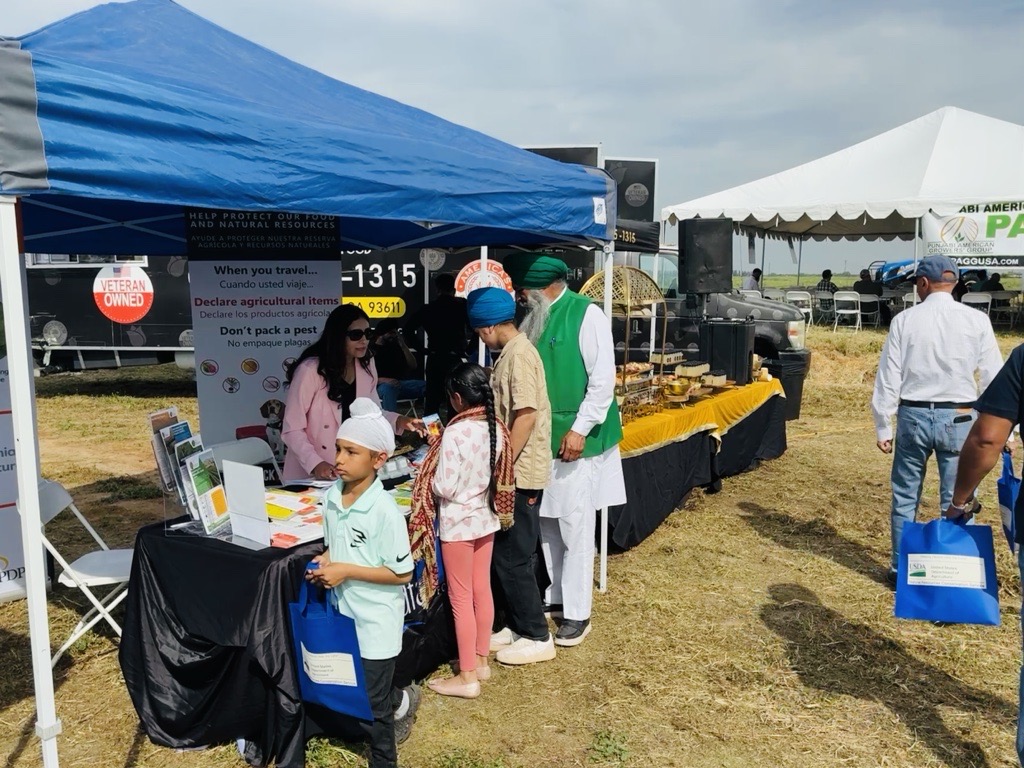
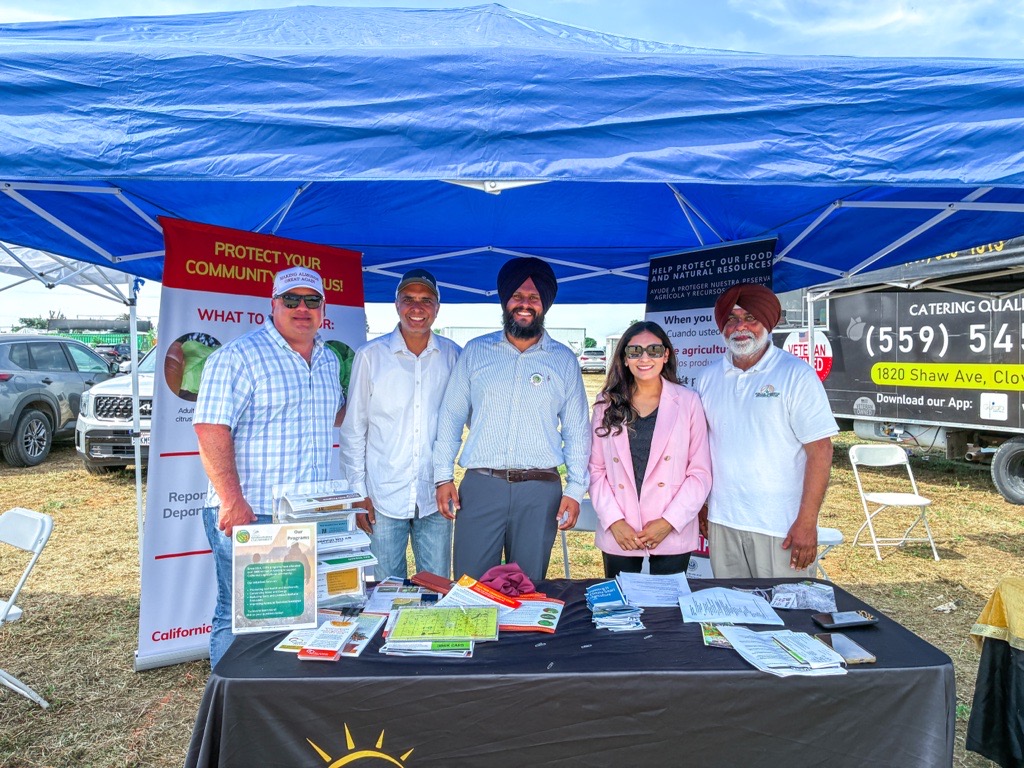
This ”farmers fair” brought together growers, agricultural leaders, and community members to share knowledge, resources, upcoming funding opportunities, and practical solutions for ongoing agricultural challenges. The primary goal of Kisan Mela is to support and uplift Punjabi farmers by creating a space where they can engage openly with experts and government agencies, access information in familiar languages, and strengthen community connections.
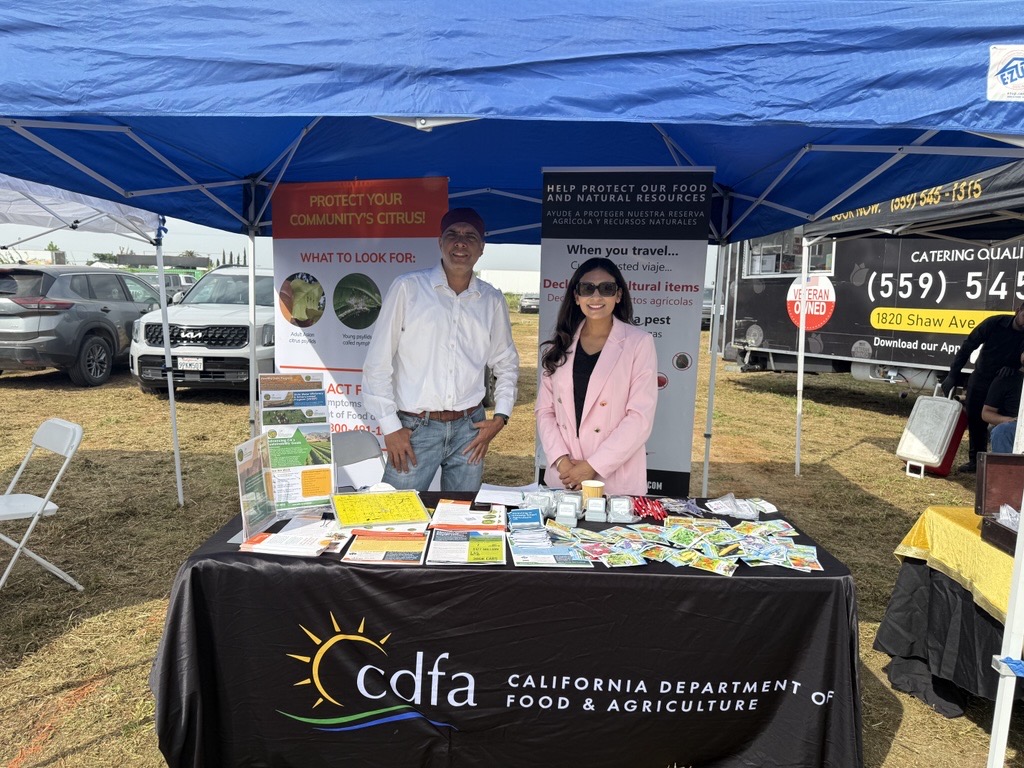
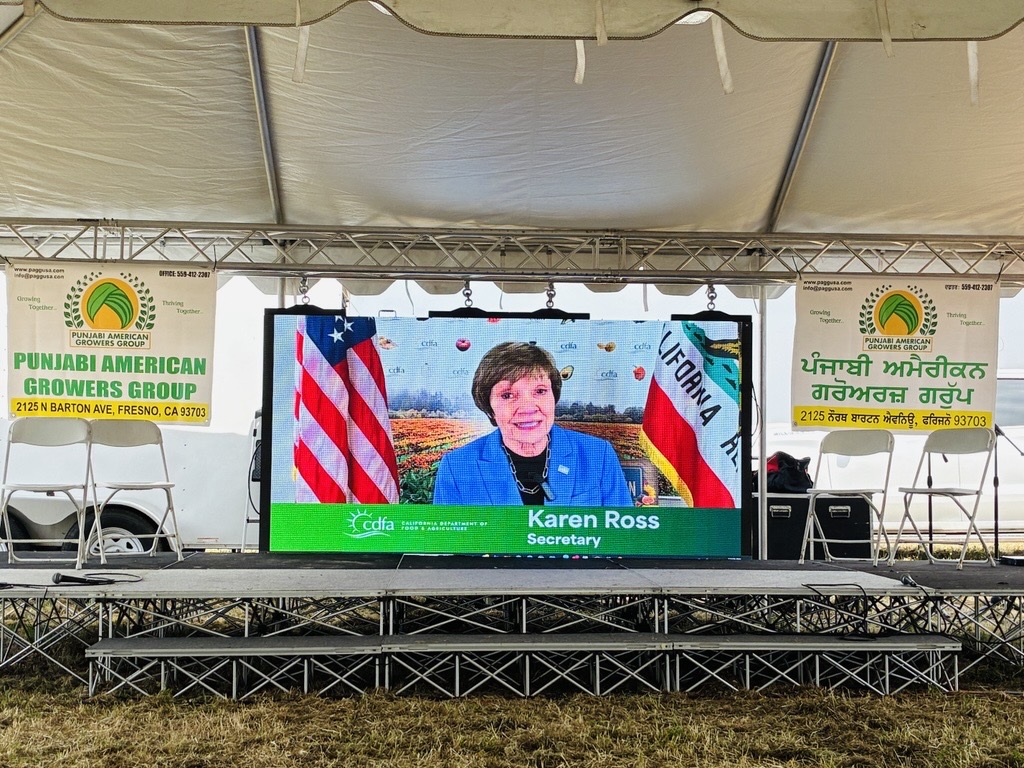
The well attended workshop was opened with remarks from California Food and Agriculture Secretary, Karen Ross and featured presentations and discussions on a variety of important agricultural topics. CDFA staff provided outreach and education on critical issues such as invasive pest and disease prevention, best management practices, and long-term pathways to agricultural sustainability through our Healthy Soils Program, SWEEP, and methane reduction initiatives. These conversations help ensure that growers have the tools and information needed to protect both their crops and their livelihoods.
A key takeaway from participating in the event was the powerful role of language and cultural connection in building trust. As Punjabi-speaking representatives of CDFA, Ravneet Bahla and Harsimran “Rosie” Gill, were able to engage with growers in their own language created a more comfortable, open environment—one where questions flowed more freely and conversations felt grounded in shared understanding. One especially memorable moment was when growers began opening up even more after discussions naturally shifted into Punjabi, and when we exchanged stories about our hometowns in Punjab. It was a meaningful reminder of how deeply shared identity and cultural familiarity can strengthen communication and relationships.
Events like Kisan Mela are valuable for CDFA because they create direct, trusted channels of communication, making government resources more accessible while also allowing agencies to better understand the needs of diverse farming communities. These gatherings strengthen partnerships among state and federal agencies, universities, and grower communities, ensuring that support reaches farmers in ways that are culturally responsive and locally informed.
CDFA remains committed to working alongside California’s diverse agricultural communities to advance sustainable, innovative, and effective pest management solutions. We thank the Punjabi American Growers Group for hosting this important event and for their continued efforts in supporting California agriculture!
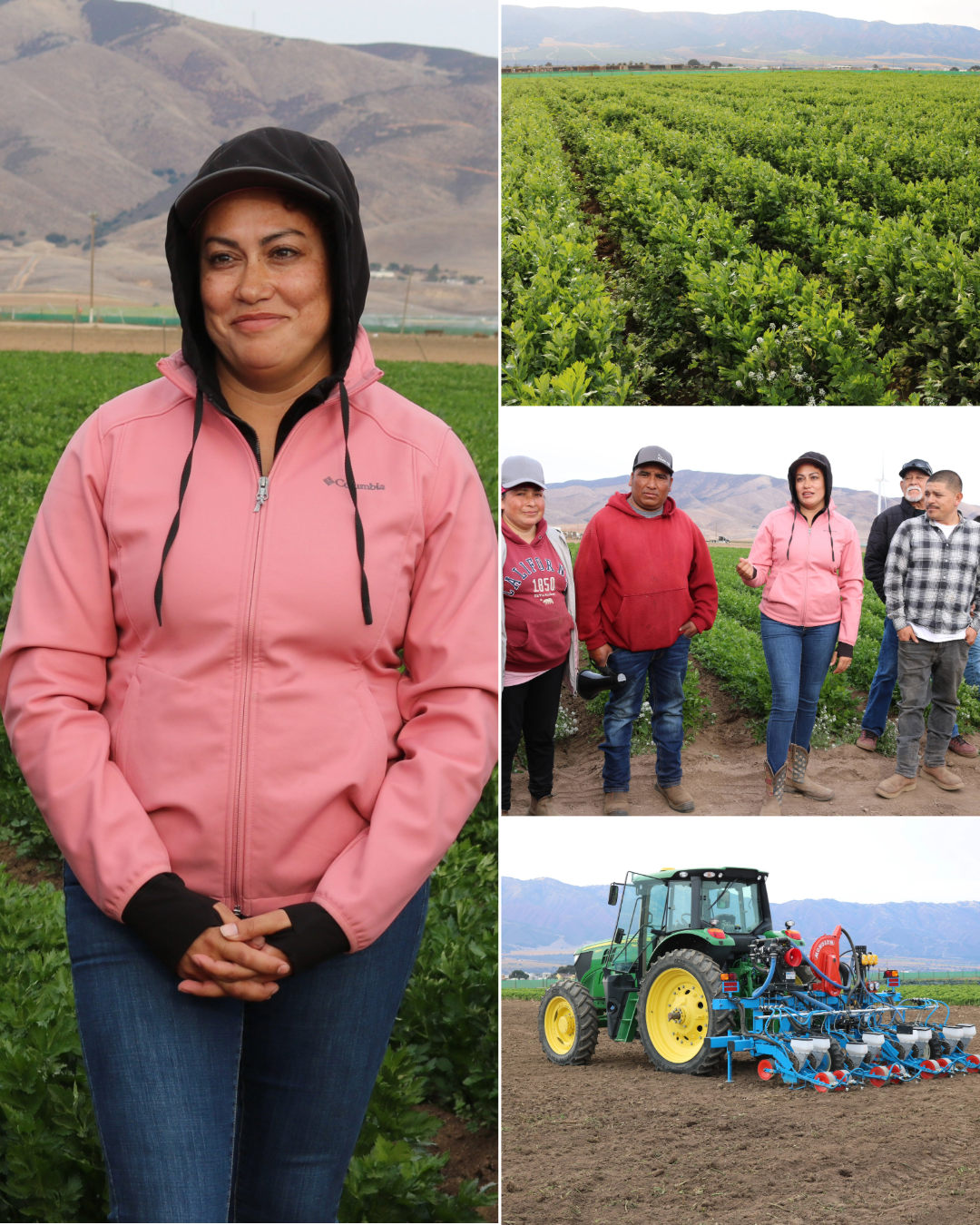
Whether you’re celebrating March as Women’s History Month, National Celery Month, or International Year of the Woman Farmer — produce grower Isabel Rosas Garcia has an impact that reaches far beyond the field. In fact, her work as a farmer, community partner, and advocate for fresh food access reflects the commitment to sustainable farming and nutrition that many farmers like Isabel bring to the table.
Isabel, a proud Latina farmer and founder of Dream Farm, a certified organic grower, has spent the past seven years fully committed to agriculture. She grows a diverse range of crops including celery, leafy greens, strawberries, broccoli, carrots, and more—bringing fresh, locally grown produce to her community.
But Isabel’s impact goes far beyond the field. She is deeply focused on getting healthy food into the hands of local students and families. By working to distribute her produce to schools and donating organic vegetables, she is helping ensure that young people have access to nourishing, fresh food.
Through her efforts, Isabel is not only contributing to California’s leadership in celery production—she’s also strengthening her community. She takes pride in helping nourish other families and making fresh produce more accessible for the next generation.
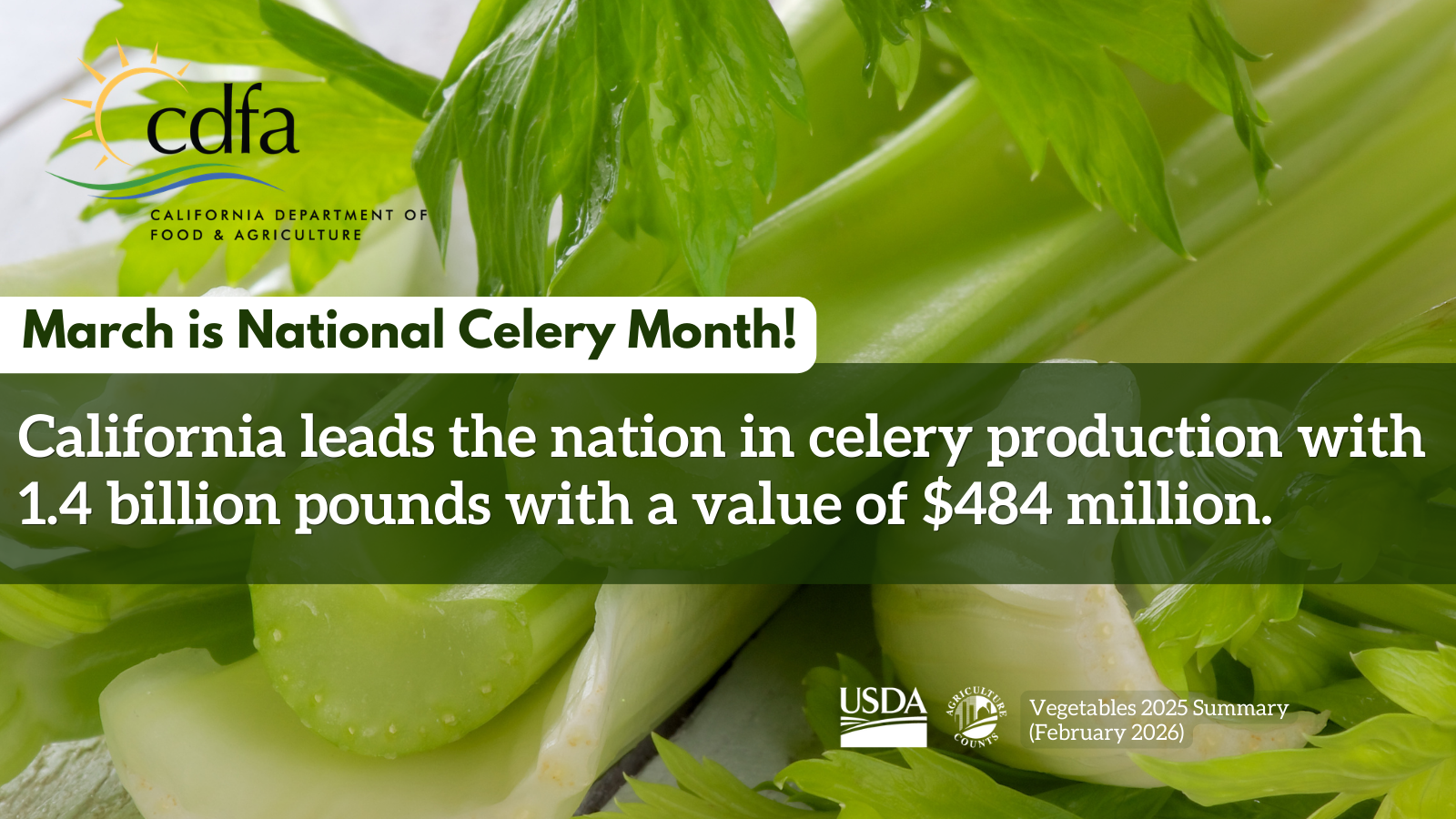
California leads the nation in celery production, growing an impressive 1.4 billion pounds valued at $484 million each year. In the Salinas Valley, one of the state’s most productive agricultural regions, farmers like Isabel Rosas Garcia are part of that legacy.
This National Celery Month, Women’s History Month and International Year of the Woman Farmer — Isabel Rosas Garcia reminds us that behind every bunch of celery is a farmer whose dedication helps feed and uplift communities.
Pictured: Isabel Rosas demonstrates her farm and celery harvest during the Latino Farmer Conference in Monterey – November 2024.
California Agriculture Day returns to the west steps of the State Capitol on Tuesday, April 21, 2026. Are you ready to celebrate our agricultural community?
Our theme this year is “California Leads,” a nod to all of the ways our farmers, ranchers and rural communities lead the nation and the world when it comes to productivity, innovation and sustainability. Just for starters:
California grows more than 400 different commodities, growing more than a third of the country’s vegetables and two-thirds of the country’s fruits and nuts.
For more than 60 consecutive years, California has been the number-one agricultural state in the nation.
California grows just over 50% of the nation’s produce.
California’s Central Valley is the most productive agricultural region in the world, providing 25% of the nation’s food.
California women in agriculture outpace the national average, making up 38% of producers and operating more farms than any other major ag state.
California’s Farm-to-School Program serves as a model for the nation, connecting California grown foods with school meal programs in 86% of California counties.
California’s agricultural industry constantly seeks to incorporate the latest scientific and technological production and marketing techniques to meet the demands of changing consumer needs and complex world markets.
Come on out and join us on April 21 and find out even more about all the ways California agriculture leads. The event is open to elected officials and staff from 10:30 am – 11:30 am and to the public from 11:30 am – 1:30 pm.